
Imagine the thrilling sound of the puck gliding swiftly across a glossy surface, the rapid clatter echoing in a lively game room. Air hockey, with its fast-paced action and competitive spirit, has captivated players of all ages for decades. But have you ever paused to consider the size of the battlefield where these epic showdowns unfold? Understanding the standard dimensions of air hockey tables is key to appreciating the game’s design, ensuring a perfect fit for your space, and even enhancing your playing experience. In this article, we’ll navigate the world of air hockey table sizes, breaking down measurements and what they mean for casual gamers and enthusiasts alike.
Understanding the Importance of Air Hockey Table Dimensions
Choosing the right air hockey table size goes beyond simple aesthetics; it fundamentally affects the gameplay experience, space utilization, and player comfort. Standard dimensions ensure the puck glides smoothly while providing enough room for players to maneuver their mallets effectively. When a table is too small, the game can feel cramped, diminishing strategic play, whereas a larger surface encourages dynamic movement but demands more room. Thus, understanding these dimensions helps enthusiasts select a table that balances excitement with practicality.
Key factors influenced by table size include:
- Reaction time and puck speed
- Player positioning and reach
- Compatibility with your available space
- Durability and material quality linked to table scale
| Dimension Category | Typical Range |
|---|---|
| Length | 48″ – 84″ |
| Width | 24″ – 48″ |
| Height | 30″ – 36″ |
Exploring Standard Sizes and Their Impact on Gameplay
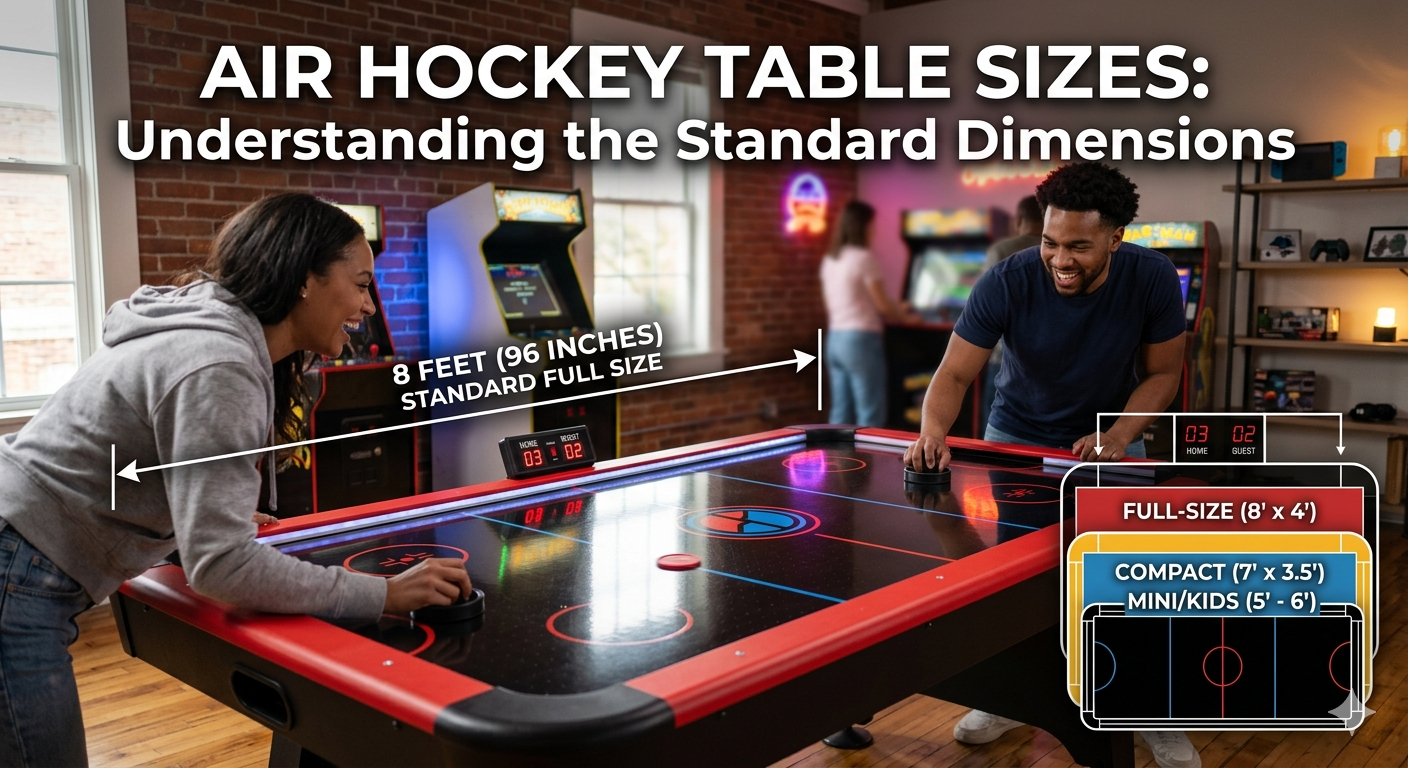
When selecting an air hockey table, understanding the nuances of standard sizes truly enhances the playing experience. Tables vary mainly by length and width, which directly affect both the speed and style of gameplay. The most common standard length ranges from 6 to 8 feet, while widths correspond to around 3 to 4 feet. Smaller tables tend to favor fast-paced, reflex-based matches, ideal for casual play or younger participants. In contrast, larger tables encourage strategic maneuvers and longer rallies, providing seasoned players more room to showcase skill and precision.
It’s fascinating how even minor differences in dimensions can shift the dynamics on the surface. Below is a quick overview illustrating typical sizes and the key gameplay impacts tied to each:
| Table Size | Length (ft) | Width (ft) | Gameplay Impact |
|---|---|---|---|
| Compact | 4 – 5 | 2 – 3 | Fast, close-quarters action |
| Standard | 6 – 7 | 3 – 3.5 | Balanced speed and strategy |
| Professional | 7 – 8 | 3.5 – 4 | Extended play with tactical depth |
- Smaller tables let players engage in rapid volleys with less space, promoting agility.
- Larger tables allow for positioning techniques, controlled shots, and a slower tempo.
- Understanding these factors can guide buyers in choosing a model best suited to their preferences and skill level.
Choosing the Right Air Hockey Table for Your Space
When selecting an air hockey table, it’s essential to carefully consider the space you have available to ensure a comfortable and enjoyable playing experience. Standard sizes vary widely, so measuring your game room before making a purchase can save you from unwanted surprises. For smaller rooms, opting for a compact or foldable table might be ideal, while larger spaces can accommodate full-sized competitive tables that offer an authentic arcade feel. Additionally, think about the clearance around the table to allow players to move freely without feeling cramped.
Beyond just the dimensions, keep these key factors in mind:
- Room layout: Consider doorways, windows, and furniture that may restrict the table’s placement.
- Player comfort: Leave at least 3 feet of space on all sides for comfortable play.
- Portability: Smaller tables with wheels or foldable legs offer versatility and ease of storage.
| Table Type | Typical Dimensions | Recommended Space |
|---|---|---|
| Mini Table | 36″ x 20″ | 6′ x 4′ |
| Standard Table | 84″ x 42″ | 10′ x 7′ |
| Professional Table | 96″ x 48″ | 12′ x 8′ |
Tips for Measuring and Selecting the Perfect Fit
When choosing the right air hockey table, precise measurements can make all the difference between a cramped game room and a perfect fit that enhances gameplay. Start by measuring the available floor space, leaving at least 3 feet of clearance on all sides. This ensures players have enough room to move freely without bumping into walls or furniture. Don’t forget to consider the ceiling height if your room has lower beams or fans, especially for taller players. Document these measurements carefully and keep them handy when comparing different table sizes to avoid last-minute surprises.
Once you have your spatial data, focus on the table’s dimensions and how they align with your game style. Here’s a quick breakdown to guide your choice:
- Standard Tables (84” length): Perfect for serious play and tournaments, requiring more room but offering authentic experience.
- Mid-size Tables (64-72” length): Ideal for family rooms and casual players, balancing space and gameplay quality.
- Compact Tables (<64” length): Best for tight spaces or children, though with shorter playing surfaces.
| Table Size | Recommended Room Clearance | Best For |
|---|---|---|
| 84″ – Full Size | Minimum 12′ x 10′ | Competitive Play |
| 64″-72″ – Mid Size | Minimum 10′ x 8′ | Family/Game Rooms |
| Under 64″ – Compact | Minimum 8′ x 6′ | Small Spaces/Kids |
Closing Remarks
As the final puck glides across the gleaming surface, understanding the dimensions of air hockey tables reveals more than just numbers-it unlocks a deeper appreciation for the game itself. Whether you’re setting up a cozy corner in your living room or outfitting a bustling arcade, knowing the standard sizes ensures the perfect fit for both space and play. So next time you challenge an opponent, let the well-measured table beneath you be a reminder that in air hockey, as in many things, precision is the key to a smooth, exhilarating game.